Archives
-
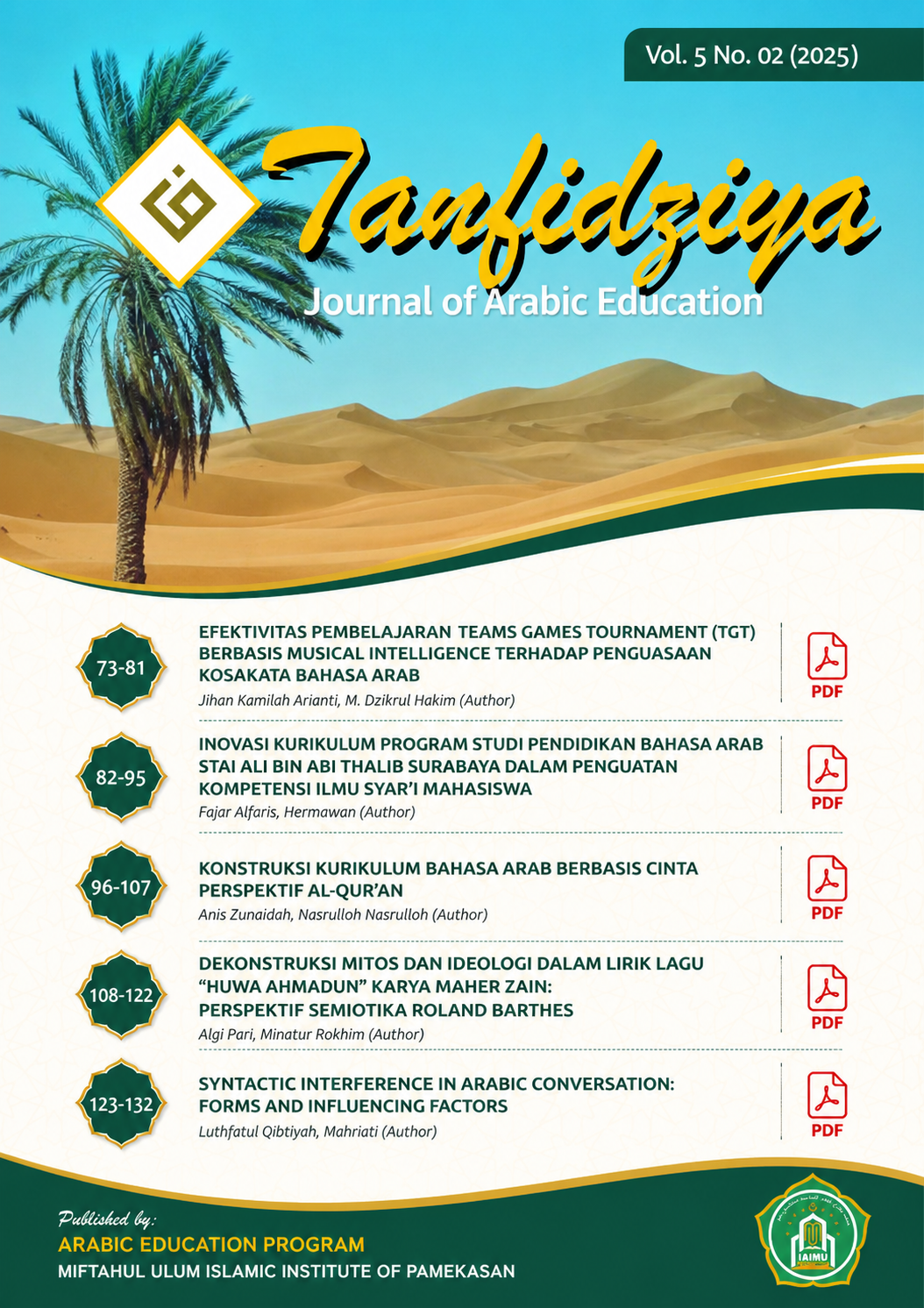
Vol. 5 No. 02 (2025)
Tanfidziya: Journal of Arabic Education proudly presents Volume 5 Number 02 (2025) under the theme "Innovation, Linguistics, and Contemporary Issues in Arabic Language Education." This issue features scholarly articles that explore contemporary developments in Arabic language education, including curriculum innovation, language teaching methodology, applied linguistics, literary studies, and educational thought. The selected contributions reflect the journal's commitment to promoting high-quality research that responds to current educational challenges and advances the discipline of Arabic language education.
-
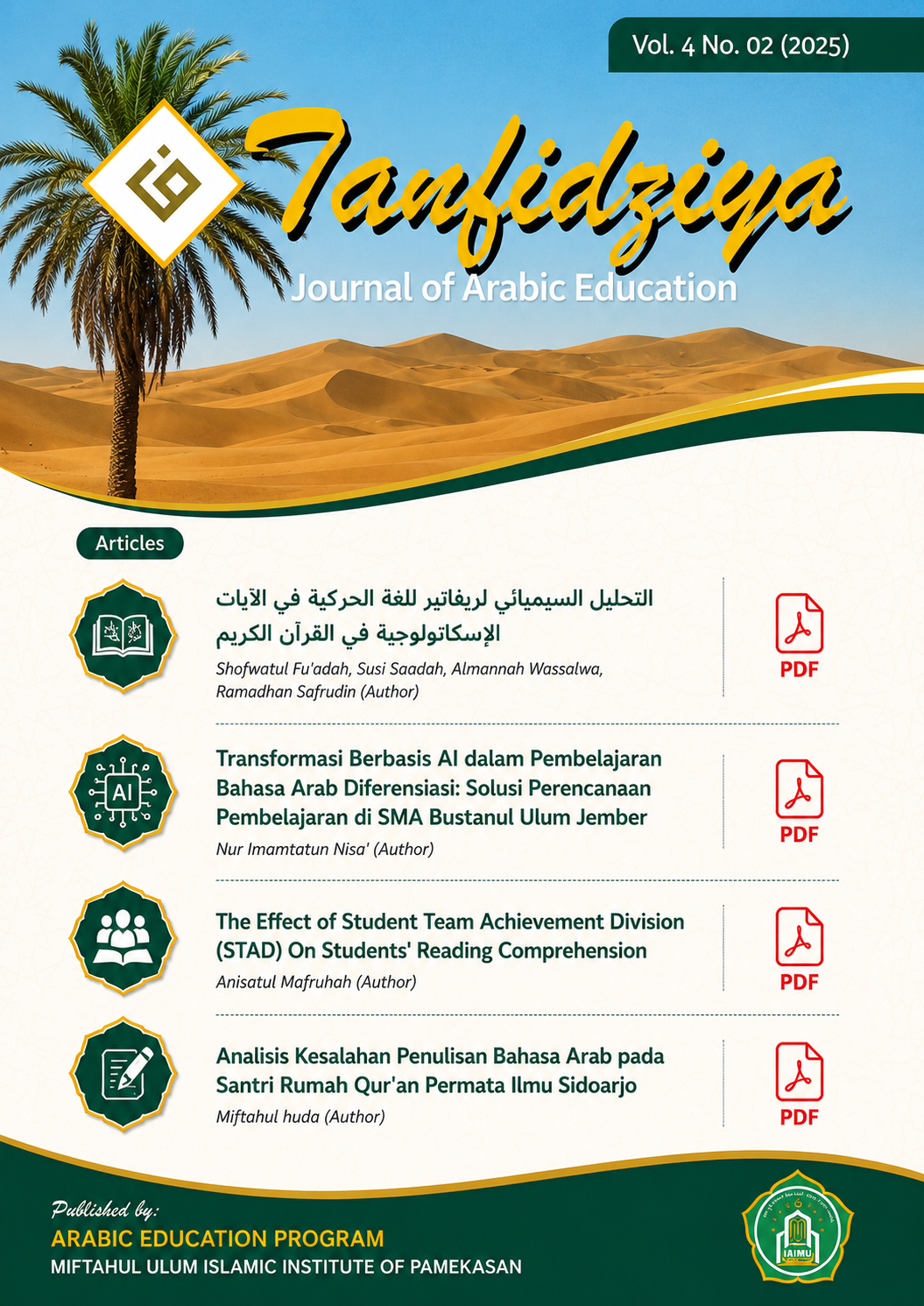
Vol. 4 No. 02 (2024)
anfidziya: Journal of Arabic Education proudly presents Volume 4, Number 02 (2024) under the theme "Emerging Trends in Arabic Language Education: Artificial Intelligence, Applied Linguistics, and Learning Innovation." This issue features scholarly contributions that reflect current developments in Arabic language education through interdisciplinary perspectives, including the integration of artificial intelligence in instructional planning, collaborative learning strategies, applied linguistic research on Arabic writing errors, and semiotic analysis of Qur'anic texts. The articles published in this issue demonstrate Tanfidziya's commitment to advancing innovative, research-driven, and future-oriented scholarship that responds to technological advancement, applied linguistics, and the evolving landscape of contemporary Arabic language education.
-
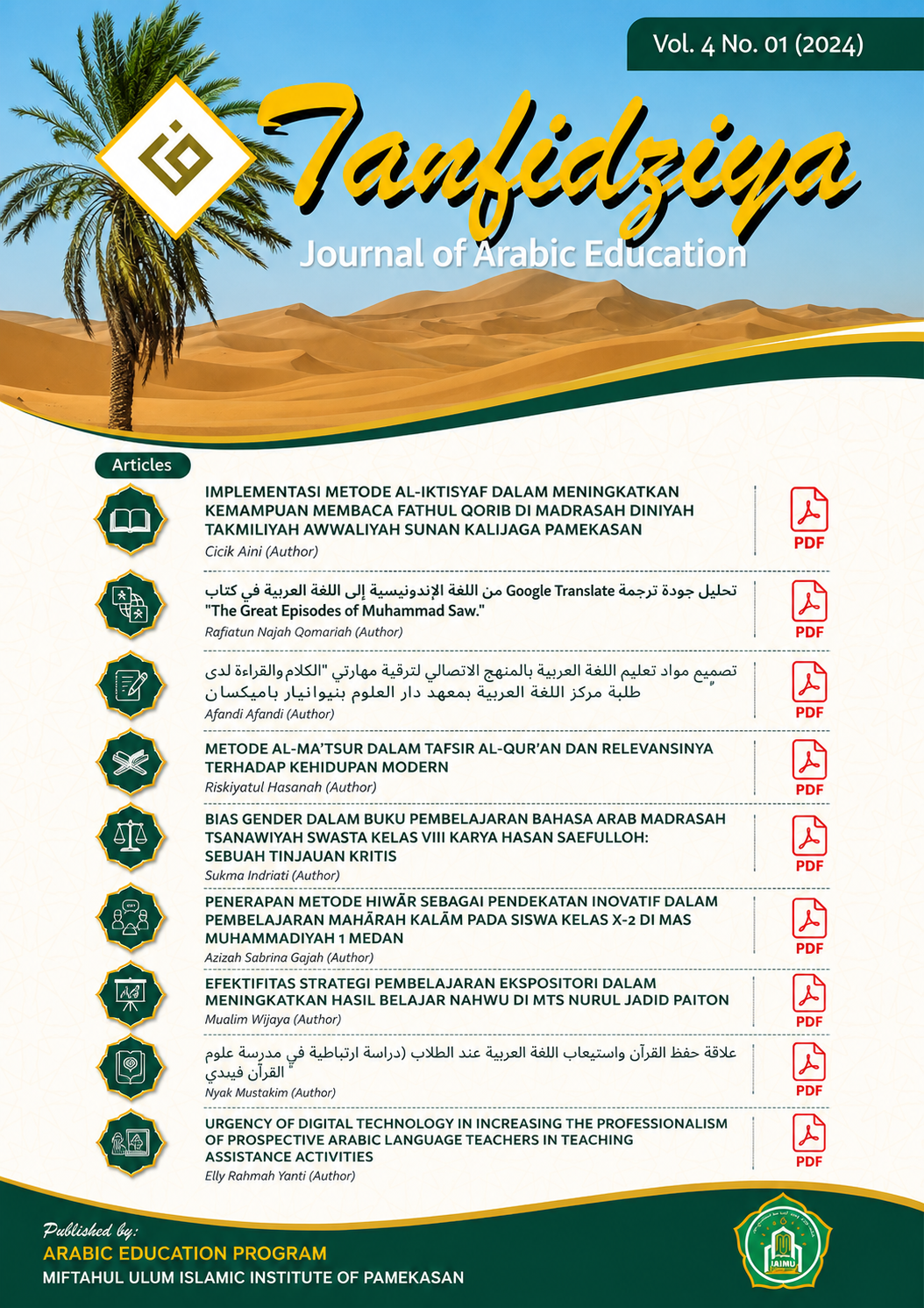
Vol. 4 No. 01 (2024)
Tanfidziya: Journal of Arabic Education proudly presents Volume 4, Number 01 (2024) under the theme "Innovation, Translation, and Contemporary Perspectives in Arabic Language Education." This issue brings together scholarly contributions that explore recent developments in Arabic language education from diverse academic perspectives, including innovative teaching methodologies, instructional material development, translation studies, digital technology integration, Qur'anic and Tafsir studies, gender issues in education, and the professional development of prospective Arabic language teachers. The articles featured in this volume reflect Tanfidziya's commitment to advancing adaptive, multidisciplinary, and impactful scholarship that addresses contemporary challenges while contributing to the ongoing development of Arabic language education and Arabic studies.
-
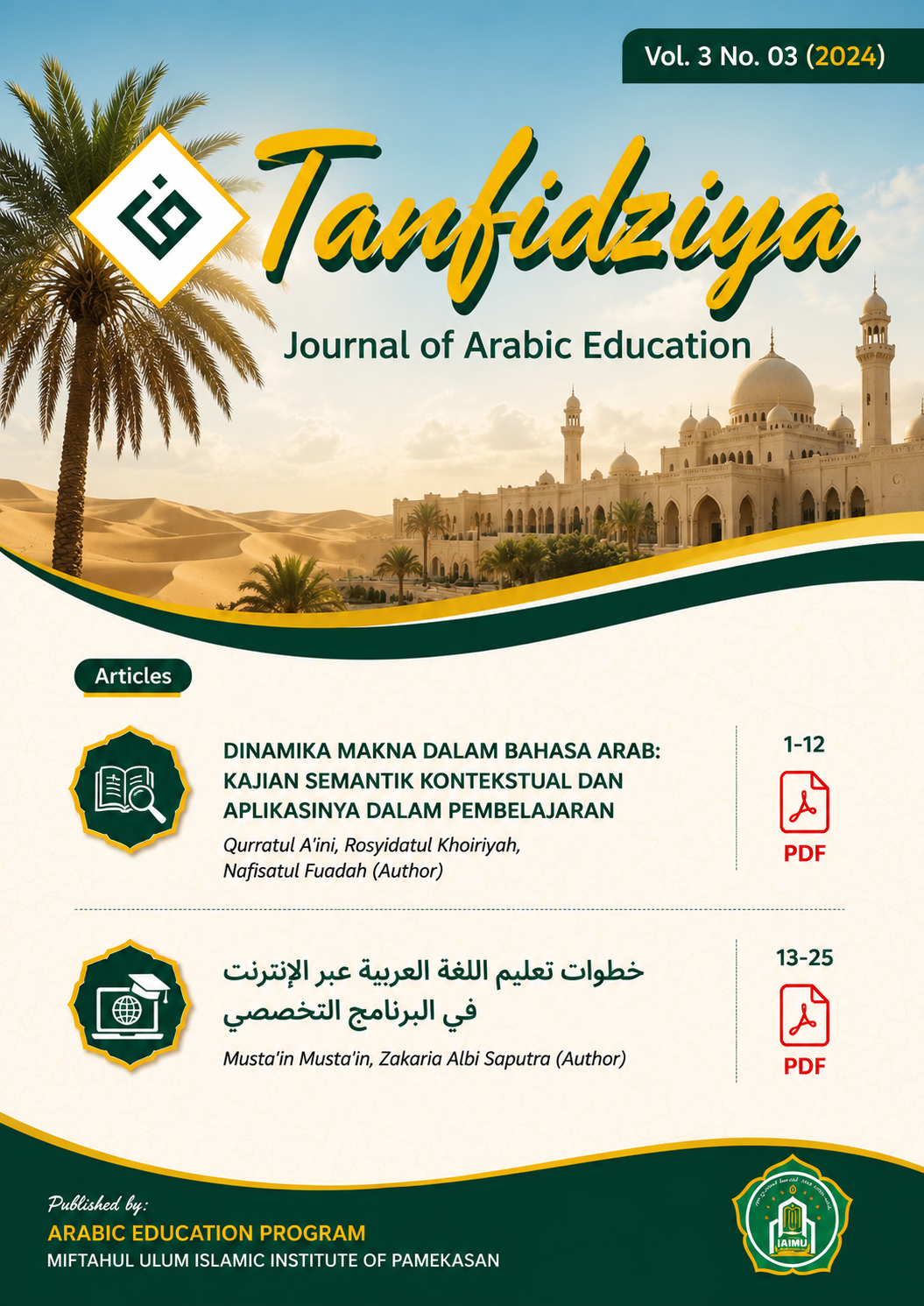
Vol. 3 No. 03 (2024)
Tanfidziya: Journal of Arabic Education proudly presents Volume 3, Number 03 (2024) under the theme "Contemporary Perspectives on Arabic Linguistics and Language Education." This issue features scholarly contributions that explore current developments in Arabic linguistics and language education through both theoretical and practical perspectives. The published articles examine contextual semantic studies as a foundation for meaning construction in Arabic and the implementation of online Arabic language instruction as a response to the ongoing digital transformation in education. Through this issue, Tanfidziya reaffirms its commitment to promoting innovative, adaptive, and high-quality scholarship that contributes to the advancement of Arabic linguistics and Arabic language education at both national and international levels